
5 Creative Ways Middle Schoolers Can Use AI for Brainstorming and Drafting
Introduction
Facing a blank page is a common challenge for young writers. With the rise of AI writing tools for middle school students, that first step transforms into an opportunity. nftw.ai reimagines brainstorming, drafting, and revising, making these processes more engaging and accessible for students, educators, and families.
Unleashing Creative Sparks With AI Brainstorming
The familiar struggle of starting an assignment is alleviated by AI brainstorming techniques on nftw.ai, which act as a supportive coach for students. These tools generate suggestion prompts, visual topic webs, and unique angles in seconds. For example, entering “climate change” yields ideas such as local weather patterns, endangered species, or eco-friendly school projects, expanding perspectives for all levels of writers.
Ask the AI for a rapid-fire list of “what if” questions to jumpstart brainstorming. Transform these questions into a color-coded mind map to organize main ideas and supporting details. For group work, a prompt generator on a smartboard lets all team members select the most compelling angle.
nftw.ai is designed by U.S. educators who understand Common Core writing standards, ensuring every suggestion aligns with curriculum requirements. The platform also safeguards student data, enabling collaborative discussions with privacy.

Drafting With Confidence Using AI-Powered Assistance
Even with ideas in hand, drafting can be daunting. AI-assisted drafting for students on nftw.ai brings order to scattered thoughts through supportive features:
Outline generators structure headings and subheadings around logical arguments. Sentence starters model effective topic sentences and transitions. Real-time feedback catches logical gaps early.
nftw.ai blends machine learning with educator-reviewed templates to adapt to various learning styles, from advanced essayists to those writing personal narratives. Unlike generic apps, it considers local standards, such as STAAR prompts in Texas, making its guidance regionally relevant.
Parents access revision histories to celebrate progress, while teachers use rubric-aligned comments for consistent assessment. The result is reduced drafting anxiety, smoother revisions, and steady improvement in student writing.

Enhancing Writing Skills With Personalized AI Feedback
Actionable feedback is essential after drafting. Traditional feedback often arrives too late, but nftw.ai’s AI-powered writing assistance delivers immediate, clear responses. The tool highlights strengths like vivid verbs or persuasive evidence and addresses areas for growth such as grammar or thesis statements, explained in plain language.
Ask the AI to prioritize three key fixes after each revision for focused improvement. Turn feedback into mini-goals, such as using varied sentence openings in the next paragraph. Track progress via the built-in dashboard to visualize gains over time.
Educators can export class analytics to identify trends and design targeted mini-lessons. Parents monitor measurable growth. By merging AI precision with expert oversight, nftw.ai delivers consistent, unbiased feedback that truly enhances writing skills with AI.
Making Creative Writing Fun and Accessible With AI
Creative writing can seem intimidating, but nftw.ai’s interactive AI tools make it engaging and accessible. Students choose genres like haiku, mystery, or sci-fi, receiving custom prompts, character ideas, and plot twists. For reluctant poets, the platform suggests syllable patterns and sensory word banks. For neurodivergent learners, it breaks tasks into manageable steps with visual cues and audio support.
Creative writing with AI reduces fear of mistakes, encouraging experimentation and growth. Scaffolding ensures accessibility for students with IEPs or English-language learners. Real-time story modules energize classes during events such as National Novel Writing Month or poetry slams.
Parents encourage weekend storytelling challenges, while teachers pair AI prompts with peer review to cultivate a classroom culture that celebrates every voice.
Empowering Educators and Parents With AI Integration Strategies
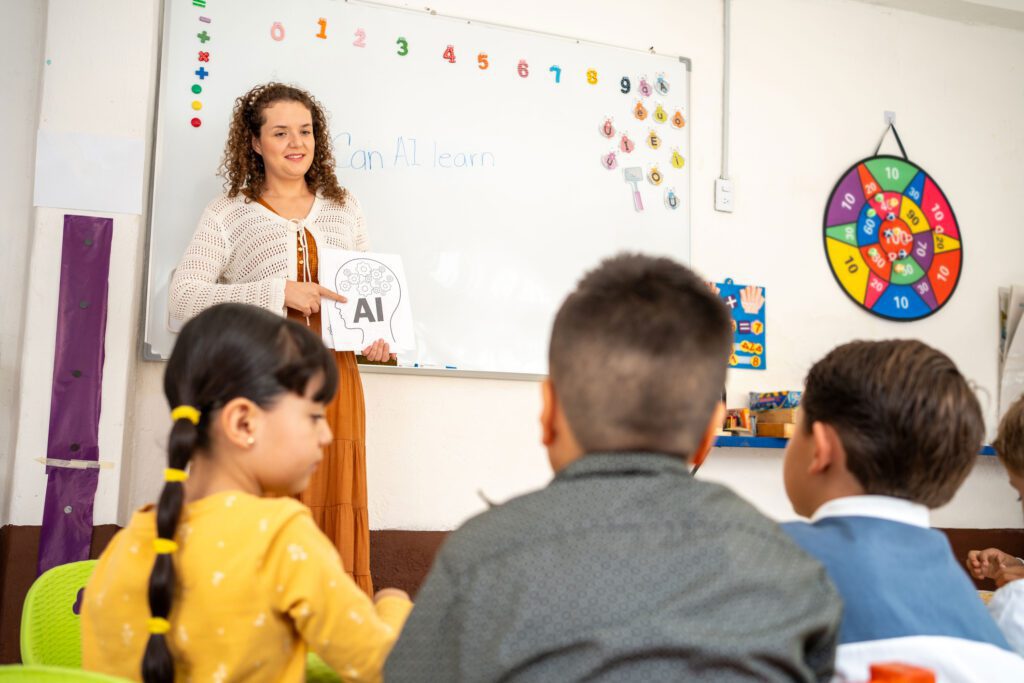
Integrating AI in middle school education may seem daunting, but starting small yields results. Introduce AI brainstorming techniques during bell-ringers, then expand to full-draft support. Best practices from nftw.ai’s workshops include:
Modeling the tool live so students observe transparent thinking. Aligning AI activities with rubric language to reinforce objectives. Establishing digital citizenship norms, prompting students to question AI suggestions and cite sources.
nftw.ai offers consulting for districts concerned about screen time or privacy, with customizable settings such as usage limits and district-wide sign-on. Parents reinforce lessons at home by reviewing AI feedback with their children, strengthening the home-school partnership. With 60 percent of U.S. teachers already using AI tools and saving up to six hours weekly, seamless integration is becoming a classroom advantage.
Why nftw.ai is a Game Changer
nftw.ai stands apart from traditional tutoring and generic AI apps by combining real-time AI suggestions with human expert oversight, curriculum alignment, flexible scheduling, and top-tier data privacy. Each learning pathway is co-designed by certified secondary educators to ensure quality and relevance for every U.S. district.
Feature comparisons highlight nftw.ai’s advantages: instant idea generation, balanced feedback, curriculum alignment across districts, flexible scheduling, and FERPA-compliant data privacy for minors. Families may choose asynchronous feedback, weekly coaching, or bundled plans that scale from a single essay to semester support, ensuring every student receives the right level of help.
How to Get Started
Create a free student profile and complete the diagnostic writing sample. Review the personalized roadmap with target skills and recommended AI tools. Select a flexible plan—single feedback, monthly subscription, or district license.

Key AI Trends Shaping Middle School Writing
Personalized learning paths are a major trend, with AI algorithms enabling customized experiences by analyzing individual student performance and adapting content to meet specific needs. This approach increases engagement and improves learning outcomes. Intelligent tutoring systems powered by AI provide real-time feedback and support, reinforcing concepts and addressing learning gaps beyond the classroom.
Market forecasts show the global AI in education market is projected to reach $112.3 billion by 2031, growing at a CAGR of 36.02 percent. By 2023, 63 percent of global educational institutions were using AI technologies, with 62 percent planning to integrate AI by 2027.
Critical data points include a Gallup and Walton Family Foundation poll showing 60 percent of U.S. K-12 public school teachers used AI tools during the 2024-2025 school year, with frequent users saving up to six hours weekly. Research from Stanford University found students in personalized learning environments progress 30-40 percent faster than peers in traditional classrooms.
The Future of Writing Starts With AI-Powered Support
From sparking ideas to polishing drafts, nftw.ai empowers middle school writers through mind maps, confidence-building draft support, personalized feedback, creative writing modules, and strategic family-school integration. By blending AI innovation with educator expertise, nftw.ai delivers unmatched support for student writing improvement. To discover more, visit our Tutoring (Grades 6–12) page.
References
How AI is Transforming Education in 2025 Key Trends to Watch – https://brightmindai.com
Top 10 AI Trends Reshaping the Future of Education – https://www.eimt.edu.eu
How ChatGPT and other AI tools are changing the teaching profession – https://apnews.com
5 AI Trends Reshaping Education Data & Applications – https://www.numberanalytics.com